
Hachijo Royal Hotel
We headed to the small Japanese island of Hachijō-jima to explore a long-time dream: the Hachijo Royal Resort, one of the most beautiful abandoned palaces in the world. We took the hour-long flight from Tokyo with a knot in our stomachs, terrified the expedition might fail. The island felt deserted, completely off the tourist trail, kept alive only by locals and fishermen. After some chaotic improvising to rent a car—navigating cash-only payments and closed banks—we finally hit the road.
As we approached the colossal, abandoned resort, our stress peaked. We parked discreetly on the beach and bypassed the main entrance. Suddenly, we heard a voice broadcasting over a megaphone. Unsure if we had been spotted or if it was just a routine island warning system, we kept sneaking into the grounds. The dense vegetation and fallen trees created a sensational, apocalyptic landscape.
Dodging the warning signs on the doors, we slipped inside through a basement storage room. Abandoned since 2006, the building was remarkably preserved, surrendered only to the ravages of time, dampness, and mold. What a thrill to watch such a place naturally decay without human interference.
We spent our first hours exploring the freezing ground floor: intact marble staircases, luxurious chandeliers, the spa with its lockers still in place, the kitschy Venus Garden Restaurant, and the decaying red poufs of the Mykonos lounge bar.
But the absolute “Holy Grail” of urbex awaited on the second floor. Here, Mother Nature had completely taken over. From floor to ceiling, from the bedding to the televisions, everything was swallowed by moss and ferns. It was pure magic—an extraordinary, out-of-time experience that made us feel like we had stepped into another dimension. On the top floor, a silent piano sat quietly among the greenery, overlooking the Pacific Ocean and the passing cars below.
The next day, after photographing the extravagant exterior and overgrown tennis courts, we headed to the airport—only to find our flight grounded due to catastrophic weather. Left to our own devices, we managed to find a last-minute guesthouse that, by pure coincidence, was located right next to the abandoned palace.
This unexpected delay gave us one last morning to explore a hidden area I had spotted on Google Maps. Fighting our way through brambles and nettles, we discovered a memorial statue of the resort’s megalomaniac founder, Eiji Yasuda, standing beside his horse.
Built in 1963, the Hachijo Royal Resort was once the largest hotel in Japan. It underwent several name changes to survive a fatal decline in tourism, as Japanese vacationers eventually favored the beaches of Hawaii and Thailand.
There is no doubt this palace will continue its slow agony for many years to come. With no rehabilitation projects in sight and demolition costs being astronomically high, this concrete behemoth will remain one of the world’s most beautiful ruins, quietly admiring the Pacific Ocean.


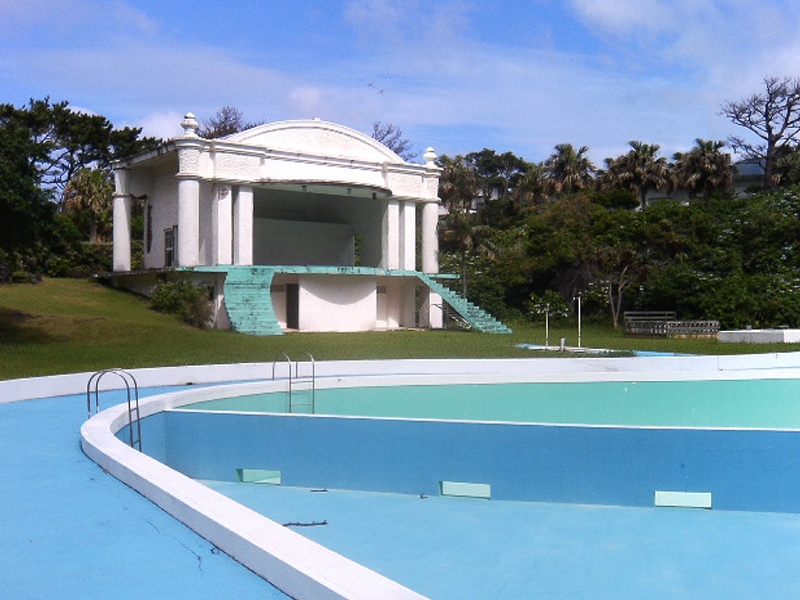
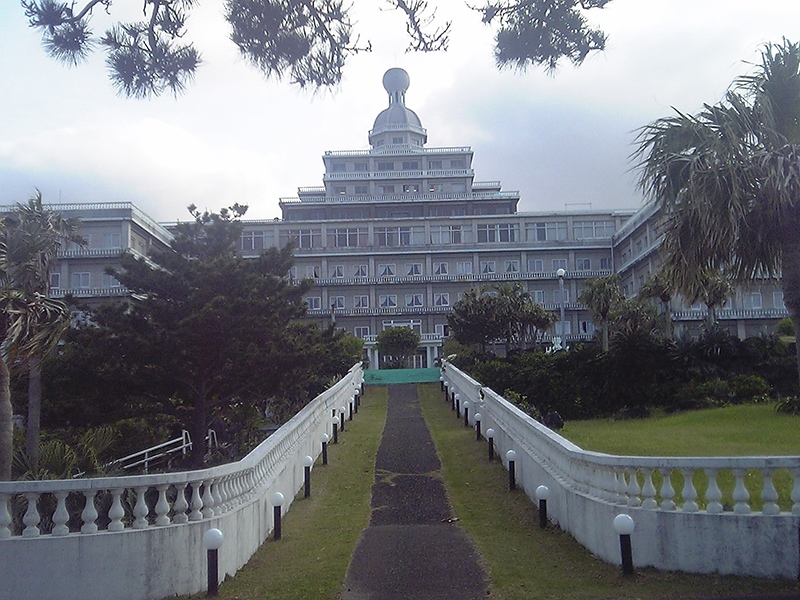
The palace also served as a filming location for the Japanese movie Trick: The Movie 2. Below, you can check out the movie trailer as well as photos to see what the place looked like back then:


Recommended books on Urbex
This selection contains Amazon affiliate links. If you make a purchase through these links, I earn a small commission at no extra cost to you.


